2 Min Series 1 December 2025
01st December 2025
- Asia Power Index 2025: Recently, India secured the third position in the Asia Power Index 2025, with the United States ranked first and China second.
- About the Asia Power Index: The Index is released annually by the Lowy Institute, an Australia-based international policy think tank.
- It evaluates how effectively countries, particularly in Asia—can shape and influence their external strategic environment.
- The 2025 edition is the seventh and assesses the power of 27 countries and territories.
- It uses 131 indicators spread across eight thematic measures, including: Military Capability, Defence Networks, Economic Capability, Economic Relationships, Diplomatic Influence, Cultural Influence, Resilience and Future Resources
- Key Findings of the Asia Power Index 2025: Both India’s economic strength and military capability have improved in the 2025 edition.
- India’s weakest area is Defence Networks, where it stands at 11th position.
- India’s economy continues to show robust growth, along with modest gains in geopolitical relevance—measured through international leverage, connectivity, and technological linkages.
- Great Nicobar Island: Recently, the discovery of a newly described wolf snake and a potentially new crake species highlighted the ecological richness and sensitivity of Great Nicobar Island. Nearly 40 new species have been reported from the island since 2021.
- Key Highlights: Wide diversity across taxonomic groups: E.g.: Includes new frogs, crabs, geckos, flies, moths, beetles emerging from the project site.
- New wolf snake: Lycodon irwini: E.g.: Named after Steve Irwin; extremely rare with a sharply restricted range; recommended for “Endangered” status under IUCN.
- Possible new bird species: Great Nicobar Crake: E.g.: Features distinctive morphological traits; very limited biological and distributional data.
- High floral and faunal richness: E.g.: 650+ plant species and 1,800+ animal species reported from Great Nicobar.
- Significant endemism: E.g.: Some faunal groups show ~24% endemism, highlighting evolutionary uniqueness.
- Prime tropical rainforest ecosystem: E.g.: Experts call Great Nicobar “perhaps the finest tropical rainforest left in India”.
- Conservation urgency amid mega-project development: E.g.: Continuous discoveries underline ecological sensitivity, increasing concern over large infrastructure activity.
- Taragiri: Recently, the Indian Navy took delivery of ‘Taragiri’, the fourth frigate of the Nilgiri-class (Project 17A). The induction marks a major milestone in India’s push for Aatmanirbharta in defence shipbuilding.
- About Taragiri (Yard 12653): Third P17A frigate built by MDL and the fourth overall under the programme.
- It is named after the former INS Taragiri, a Leander-class frigate that served from 1980 to 2013.
- The new vessel embodies a modern reincarnation of its illustrious predecessor.
g.: Taragiri continues a naval lineage built on 33 years of service. - About Project 17A: India’s Advanced Stealth Frigate Programme
- Designed by the Warship Design Bureau (WDB) and overseen by the Warship Overseeing Team (Mumbai).
- Represents a generational upgrade over the Shivalik-class (Project 17).
- Based on the philosophy of Integrated Construction, enabling on-time delivery. E.g.: P17A showcases India’s maturing complex warship design capabilities.
- Darjeeling Mandarin Orange: Recently, the Darjeeling Mandarin Orange was granted Geographical Indication (GI) status.
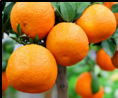
- About Darjeeling Mandarin Orange: Cultivated in the Darjeeling hills of West Bengal, it is a major cash crop of the region.
- Botanically known as Citrus reticulata Blanco, it is widely recognised for its rich aroma and flavour.
- Locally called “suntala”, it is considered a symbol of pride for the people of Darjeeling.
- It is the third GI-tagged product from the region, following Darjeeling Tea and Dalley Khursani chilli.
- Climatic Requirements: Grown at elevations between 600–1,500 metres above sea level.
- Mandarins thrive in frost-free tropical and subtropical climates up to 1,500 m elevation.
- Annual rainfall: 100–120 cm.
- Temperature range: 10°C to 35°C is ideal for growth.
- Soil: Prefers medium to light loamy soils suitable for healthy cultivation.
- Air Pollution: Recently, an AIIMS Delhi study found that long-term exposure to the city’s hazardous winter air is worsening rheumatoid arthritis. It also shows that the immune system is being altered even in residents who show no symptoms yet.
- Key Findings: 5 enters bloodstream & triggers systemic inflammation: E.g.: Tiny particles move from lungs → blood → cause oxidative stress, tissue damage, and immune imbalance.
- Pollution, not winter cold—causes inflammation: E.g.: Cold increases stiffness, but inflammation flare-ups in arthritis patients are pollution-driven (AIIMS finding).
- Long-term polluted-air exposure rewires the immune system: E.g.: PM2.5 alters airway proteins → body no longer recognises them → immune system attacks them (“breach of tolerance”).
- Molecular mimicry leads to joint damage: E.g.: Altered proteins resemble synovium (joint lining) → immune system attacks joints → early rheumatoid arthritis risk rises.
- Pollution linked to “pre-clinical autoimmunity” in Delhi: E.g.: Nearly 20% residents show autoantibodies years before symptoms due to long-term pollution exposure.
- Higher risk near arterial roads: E.g.: People living within 50 metres of busy roads show significantly higher autoimmune markers.
- Elderly most vulnerable: E.g.: Pollution increases inflammation → worsens heart disease, hypertension, diabetes; carriers pathogens too.
- WorldSkills Asia Competition (WSAC) 2025: Recently, India delivered a powerful performance at its first-ever participation in the WorldSkills Asia Competition (WSAC) 2025. The country finished 8th among 29 participating nations.
- Key Highlights: Led by MSDE with national skill partners: E.g.: Training coordinated by the Ministry of Skill Development and Entrepreneurship (MSDE), National Skill Development Corporation (NSDC) and technical partners.
- Team composition: E.g.: 23 competitors participated in 21 skill categories, supported by 21 experts.
- Strong performance across traditional & tech-driven skills: E.g.: India won 1 Silver, 2 Bronze, and 3 Medallions for Excellence, showing global-standard competence.
- Women competitors performed exceptionally: E.g.: Significant contribution to medal tally; excelled in non-traditional skill areas; earned “Best in Country” medals.
- Competitor selection & preparation pipeline: E.g.: Selected via IndiaSkills National Competition 2024; trained through industry-led programs by academic institutions, Sector Skill Councils, and global experts.
- Strengthening India’s global skills presence: E.g.: Performance builds a strong foundation for future international events and reinforces India’s ambition to be a global skills hub.
- Reflects effectiveness of national skilling initiatives: E.g.: Highlights contribution of trainers, industry partners, and Sector Skill Councils (SSC) in preparing youth for world-class benchmarks.
- Norovirus: Recently, the United States reported a rise in norovirus cases, commonly known as the “winter vomiting disease.”
- About Norovirus: A highly contagious virus that causes inflammation of the stomach and intestines, leading to gastroenteritis. It is also referred to as the “stomach flu” or the “winter vomiting bug.”
- Outbreaks typically occur seasonally, especially during colder months.
- It infects people of all age groups and spreads rapidly.
- Noroviruses cause around 90% of viral gastroenteritis outbreaks and nearly 50% of global cases.
- Because multiple strains exist, a person can get infected multiple times in their lifetime.
- Transmission: Infection can occur through person-to-person contact, contaminated food or water, or touching infected surfaces.
- Symptoms: Common symptoms include vomiting, diarrhoea, stomach cramps, nausea, fever, and fatigue. Severe cases may cause dehydration due to fluid loss.
- Treatment: Most individuals recover without specific medical treatment.
- No vaccine is currently available.
- Management focuses on symptom relief and maintaining adequate hydration.
- Severe cases may require intravenous (IV) rehydration.
- Baikonur Cosmodrome: Recently, the launch of a Russian Soyuz-2.1a rocket caused damage to the Baikonur cosmodrome, prompting authorities to suspend crewed operations.
- About Baikonur Cosmodrome: World’s oldest and largest operational spaceport E.g.: Established in the 1950s on the Kazakh steppe; cornerstone of Soviet and Russian space missions.
- Birthplace of the Space Age: E.g.: R-7 launcher sent Sputnik-1 (1957) and Vostok-1 (1961) carrying Yuri Gagarin from Baikonur.
- Strategic infrastructure & facilities: E.g.: Multiple launch complexes, assembly buildings, tracking stations, control centres, and residential zones.
- Supports major launch vehicles: E.g.: Compatible with Proton, Soyuz rockets and ISS-bound cargo/crewed spacecraft.
- Operated by Russia under long-term lease: E.g.: Kazakhstan owns it; Russia leases it till 2050 for civilian and military space operations.
- Ongoing relevance amid diversification: E.g.: Engineers repairing recent damage; Russia simultaneously developing domestic launch sites like Vostochny.
- Lakshadweep and the Andaman & Nicobar Islands: Recently, a new national-level demographic report by the International Institute of Migration and Development (IIMAD) and the Population Foundation of India (PFI) projected a steady rise in the populations of Lakshadweep and the Andaman & Nicobar Islands by 2051.
- Key Findings: Moderate population growth projected by 2051: E.g.: Lakshadweep projected to increase by 68%; Andaman and Nicobar Islands projected to increase by 5.73%.
- Lakshadweep population projection (2016 → 2051): E.g.: 67k persons → 74k persons.
- Andaman & Nicobar Islands population projection (2016 → 2051): E.g.: 3,98,00 persons → 4,21,000 persons.
- Gender-wise projection for Lakshadweep: E.g.: Male: 34k → 37k; Female: 32k → 36k.
- Gender-wise projection for Andaman & Nicobar Islands: E.g.: Male: 2,13,000 → 2,26,000; Female: 1,84,800 → 2 Lakh(appx).
- Reason for alternative projection method: E.g.: Smaller States/Union Territories show erratic decadal growth, and Sample Registration System (SRS) lacks consistent demographic inputs.
- Method used: Logistic curve-fitting: E.g.: Logistic mathematical models employed to project populations due to unreliable trend data in small territories.
- Datasets used for projections: E.g.: Census of India, Sample Registration System (SRS), National Family Health Survey (NFHS), Civil Registration System (CRS), and National Sample Survey (NSS).
 Detailed Solutions & Explanations

