2 Min Series 04th December 2025
04th December 2025
1. India’s First All-Electric Green Tug: Recently, the Union Minister for Ports, Shipping and Waterways inaugurated the steel-cutting ceremony for India’s first all-electric green tug, marking a new milestone in the country’s maritime decarbonisation efforts.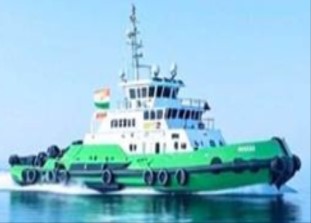
-
About India’s First All-Electric Green Tug: The tug will operate with zero emissions, silent propulsion and optimised energy efficiency.
- Designed for DPA Kandla, it is part of India’s shift to future-ready and sustainable port operations. E.g.: Electric propulsion system reducing carbon intensity in harbour manoeuvres.
- Tug features 60-ton bollard pull capacity, advanced navigation systems and low-maintenance design. E.g.: Enhanced tugboat performance for escorting and emergency support.
- Green Tug Transition Programme (GTTP): Aims to induct 50 green tugs by 2030, with 16 in Phase-1 (2024–27).
- Four major ports have already awarded contracts; DPA is the first to begin construction.
- Tug will support harbour movement, escort operations and emergency response—all with zero emissions. E.g.: Cleaner, efficient port logistics with reduced energy costs.
2. National Forensic Infrastructure Enhancement Scheme (NFIES): Recently, the Union Cabinet approved the National Forensic Infrastructure Enhancement Scheme (NFIES), aimed at strengthening India’s forensic capacity through modern infrastructure and skilled manpower.
-
About NFIES: To strengthen India’s forensic ecosystem by expanding infrastructure and developing highly trained professionals.
-
A Central Sector Scheme under the Ministry of Home Affairs (MHA).
-
Approved in 2024. Implementation period: 2024–25 to 2028–29.
-
Objectives: Establish a robust network of forensic labs across India.
-
Prepare world-class forensic professionals through expanded training institutions.
-
Ensure scientific, fast and reliable examination of evidence.
-
NFIES Is Needed: New laws mandate forensic investigation for offences punishable with seven years or more.
-
Expanded legal requirements have increased the burden on FSLs.
-
Significant manpower gaps in Forensic Science Laboratories across states.
-
Case backlogs remain high due to limited infrastructure and personnel.
-
Strategic Goal: Strengthen India’s criminal justice system and push conviction rates above 90%.
3. Acid Attack Survivors: Recently, the Supreme Court highlighted delays in compensation and free treatment for acid attack survivors, directing the National Legal Services Authority (NALSA) to provide State-wise data.
-
Key Highlights: Since 2013–15, States are required to pay ₹3 lakh compensation, including ₹1 lakh within 15 days and the remaining within two months.
-
NGO Acid Survivors Saahas Foundation informed the court that victims often receive only the initial ₹1 lakh. States like Maharashtra and Uttar Pradesh reported almost no payments for reconstructive surgeries.
-
Private hospitals must provide free critical care, including medicines, bed, food and emergency treatment. They may refer victims to specialised facilities, but only after providing stabilising care. E.g.: Hospitals can be held criminally liable for refusal.
-
Ground Reality Presented to Bench: Counsel for the NGO reported hospitals demanding full payment before treatment.
-
NALSA directed to gather detailed information from all State Legal Services Authorities on compensation disbursed.
-
Court instructed State Chief Secretaries to ensure timely release of funds to legal services authorities for disbursement to victims.
4. RBI Integrated Ombudsman Scheme (RB-IOS): Recently, the Reserve Bank of India’s latest Annual Report noted a 55% rise in complaints under the RBI Integrated Ombudsman Scheme (RB-IOS) in FY25, indicating growing public reliance on the central bank’s grievance-redress system.
-
About RB-IOS: Launched on November 12, 2021. Merged three earlier schemes: Banking Ombudsman Scheme, 2006; Ombudsman Scheme for NBFCs, 2018 and Ombudsman Scheme for Digital Transactions, 2019
-
Scheme is jurisdiction-neutral, removing location-based barriers.
g.: Customers can file complaints irrespective of branch or regional jurisdiction.
-
Objective: To offer a speedy, cost-effective and expeditious alternate grievance redress mechanism for customers of regulated entities (REs). E.g.: Fair and timely resolution without litigation.
-
Key Features: “Deficiency in service” is the main basis for complaints, excluding specified exceptions.
-
Applies to all commercial banks, NBFCs, RRBs, payment system operators, major UCBs (≥ ₹50 crore deposits) and credit bureaus.
-
A central RBI centre in Chandigarh handles complaints in any language via physical or email submission.
-
Ombudsman may award up to ₹20 lakh for losses plus ₹1 lakh for harassment, mental anguish, time loss or related expenses.
5. INS Aridhaman: Recently, the Indian Navy prepared to induct its third nuclear-powered ballistic missile submarine (SSBN), INS Aridhaman, marking a significant boost to India’s sea-based nuclear deterrence and underwater strategic capabilities.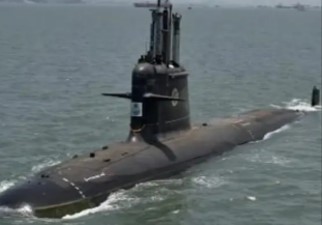
-
About INS Aridhaman: India’s third indigenously developed nuclear-powered ballistic missile submarine.
-
It is the second submarine in the Arihant class.
-
Constructed under the Advanced Technology Vessel (ATV) Project at the Ship Building Centre, Visakhapatnam.
-
Key Features: Displacement Capacity: 6,000 tonnes surfaced, 7,000 tonnes submerged
-
Powered by an 83 MW pressurised water reactor built by Bhabha Atomic Research Centre (BARC).
-
Equipped with four vertical launch tubes.
-
Fitted with anechoic tiles for noise reduction.
-
Enhanced detection capabilities and underwater situational awareness.
-
Ballistic Missile Options: K-15 Sagarika missiles (range 750 km) — up to 24 can be carried.
-
K-4 intermediate-range missiles (range 3,500 km) for long-range nuclear strikes.
6. Bitra Island: Recently, the Indian Navy said its new detachment on Bitra Island is nearly complete, boosting surveillance and security in the Arabian Sea.
-
About Bitra Island: Situated in the northern Lakshadweep region in the Arabian Sea.
-
Smallest inhabited island in the Union Territory.
-
Despite its tiny land area, Bitra has a 61 sq. km lagoon.
-
Home to a shrine dedicated to Malik Mulla, an Arab saint said to be buried here.
-
A pilgrimage site for residents of neighbouring islands.
-
As per 2011 Census, the population stands at 271.
-
Once covered in dense shrubs and a major seabird breeding habitat.
-
Bird populations declined in the 19th century due to human activity.
-
Climate of Bitra Island: Similar to Kerala’s weather patterns.
-
Temperature ranges 25°C to 35°C.
-
Geopolitical Significance: Bitra holds high strategic value due to its location in the Arabian Sea.
-
New Defence Presence: Will become the third island in Lakshadweep with a defence establishment.
-
Other naval bases: INS Dweeprakshak, Kavaratti and INS Jatayu, Minicoy.
7. Child Marriages: Recently, Parliamentary data showed a sharp 47% rise in child marriages in Madhya Pradesh, with 538 cases reported in 2025 — the highest in five years.
-
About Child Marriage Hotspot: A ‘hotspot’ refers to a persistent cluster of districts reporting disproportionately high child marriages.
-
Concentrated mainly in Bundelkhand, central MP, Gwalior–Chambal region, and tribal belts.
Statewide Increase: Cases rose from 366 (2020) to 538 (2025) — a 47% jump despite multiple awareness and prevention campaigns.
-
Damoh alone accounts for 21% of all cases in 2025. Cases jumped from 33 (2024) to 115 (2025).
-
Most cases come from Bundelkhand, tribal belts and economically backward pockets.
-
Implications of Rising Child Marriages: Leads to loss of education, poorer health outcomes and restricted economic opportunities.
-
Higher chances of early pregnancies, maternal mortality and domestic violence.
8. Opium Poppy Cultivation: Recently, a new UNODC report showed that Myanmar’s opium poppy cultivation has increased by 17%, reaching 53,100 hectares — the highest level in a decade.
-
About Opium Poppy Cultivation: Opium poppy (Papaver somniferum) is cultivated for its latex-rich capsules, which produce opium and its derivatives.
-
Its alkaloids feed both pharmaceutical industries and illegal drug markets.
Opium cultivation became a government-controlled monopoly under the East India Company and later British rule.
-
After 1950, India placed all opium-related activities under Central Government control.
-
Regulated today through the NDPS Act, 1985.
-
Characteristics: Thrives in cool, dry climates with low humidity and well-drained soil.
-
Green capsules are lanced to release a milky latex containing morphine, codeine and other alkaloids.
-
Annual winter crop maturing in around 120 days.
-
Uses of Opium: Used across Ayurveda, Unani and Homoeopathy. E.g.: Essential ingredient for controlled pharmaceutical production.
-
Poppy seeds consumed as food and used for edible oil. E.g.: Widely used in Indian cuisine.
9. Department of Animal Husbandry and Dairying: Recently, the Department of Animal Husbandry and Dairying (DAHD) expanded multiple national programmes to enhance milk productivity, strengthen genetic improvement in bovines, and build climate resilience across India’s dairy sector.
-
Key Initiatives:
- Nationwide Artificial Insemination Programme (RGM): Artificial insemination expanded in districts with <50% coverage. High-genetic-merit bull semen provided at farmers’ doorstep free of cost. E.g.: Mobile AI vans delivering services in drought-prone blocks.
- Genomic Selection Through Indigenous Chips: Gau Chip (cattle) and Mahish Chip (buffalo) developed to identify High Genetic Merit (HGM) animals. Farmers can access genomic testing through a dedicated online portal. E.g.: Selection of top buffalo bulls using Mahish Chip data.
- Animal Husbandry Infrastructure Development Fund (AHIDF): 3% interest subvention for processing & diversification infrastructure. Expands market access for unorganized dairy producers. E.g.: New paneer processing units supported through AHIDF loans.
- Livestock Health and Disease Control Programme (LHDCP): Vaccines & consumables supplied to States. Vaccination undertaken by State Animal Husbandry Departments. E.g.: Nationwide vaccination drives for FMD & Brucellosis.
 Detailed Solutions & Explanations

