2 Minute Series_29th August 2025
29th August 2025
- National Annual Report and Index on Women’s Safety: Recently, the National Annual Report and Index on Women’s Safety (NARI) 2025, revealed significant differences in women’s safety across Indian cities.
- Key Findings: Safest City: Kohima, Visakhapatnam, Bhubaneswar, Aizawl, Gangtok, Itanagar, Mumbai.
- Least Safe: Patna, Jaipur, Faridabad, Delhi, Kolkata, Srinagar, Ranchi.
- Top-ranked cities correlate with higher gender equity, civic participation, better policing, and women-friendly infrastructure.
- National safety score: 65%, cities categorized as “much above”, “above”, “below”, or “much below” this benchmark.
- 60% of women felt safe in their city; 40% felt “not so safe” or “unsafe”.
- About 91% reported safety at workplaces, but half were unclear if POSH policies existed.
- 7% experienced harassment in public spaces in 2024, doubling to 14% among women under 24.
- Harassment hotspots: neighbourhoods (38%) and public transport (29%).
- UDISE+ 2024-25 Report: Recently, the Ministry of Education (MoE) released the Unified District Information System for Education Plus (UDISE+) 2024-25 report, revealing a notable decline in school enrolment across India.
- Key Findings:
- Decline in School Enrolment: Ages 3–11 (Anganwadi, pre-school, Class 1–5): dropped by ~25 lakh, from 12.09 crore (2023-24) to 11.84 crore (2024-25).
- Total enrolment (Class 1–12): declined by 11 lakh, from 24.8 crore to 24.69 crore, the lowest since 2018-19.
- Reasons for Decline: Falling birth rates and demographic shifts; TFR dropped to 91 per woman by 2021, below replacement level (2.1).
- Migration and increasing presence of children in standalone pre-primary private institutions.
- States with TFR above replacement: only Uttar Pradesh, Bihar, Meghalaya.
- Gross Enrolment Ratio (GER) has improved across levels: middle school rose from 89.5% to 90.3%, while secondary school increased from 66.5% to 68.5%.
- Dropout rates have declined significantly: preparatory stage fell from 3.7% to 2.3%, middle school from 5.2% to 3.5%, and secondary school from 10.9% to 8.2%.
- Burmese Pythons: Recently, non-native Burmese pythons have become a major ecological threat in Florida, preying heavily on local wildlife. Their large size, camouflage, and secretive behavior make them difficult to catch, prompting authorities to seek innovative control methods.
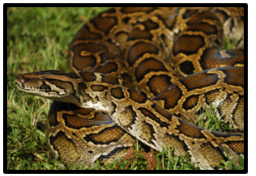
- Innovative Approach: The South Florida Water Management District has deployed animatronic rabbits (Robot Rabbits) to attract pythons. Key features of these robot decoys include:
- Movement, body heat, and scent that mimic live marsh rabbits.
- Cameras that alert wildlife teams when a python approaches.
- Designed to draw pythons out of hiding in forests and swamps near Everglades National Park.
- Samudrayaan Project: Recently, India announced that it will join a select group of countries, including the United States, Russia, China, Japan, and France, capable of deep-sea exploration through its Samudrayaan Project.
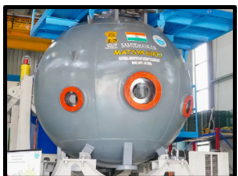
- The mission plans to send three humans to a depth of 6,000 metres by 2027, unlocking the vast potential of India’s deep oceans.
- About Samudrayaan Mission: Part of India’s Deep Ocean Mission (approved 2021, ₹4,077 crore over 5 years) to explore and sustainably utilise deep ocean resources.
- Human Submersible: Development of a crewed submersible to carry three humans up to 6,000 metres below sea level.
- Technology Development: Focus on underwater vehicles, robotics, and deep-sea mining technologies.
- Deep-Sea Mineral Exploration: Survey and extraction of polymetallic nodules containing nickel, cobalt, and rare earth elements.
- Ocean Climate Services: Establish advisory services using observations and predictive models to study climate change.
- Biodiversity Conservation: Exploration and protection of deep-sea biodiversity.
- Energy and Water Extraction: Innovating technologies to derive energy and freshwater from the ocean.
- Strategic Goal: Strengthen India’s blue economy by leveraging the country’s 11,098 km coastline for sustainable economic growth.
- Export Promotion Mission: Recently, the government is considering providing support worth approximately Rs 25,000 crore to exporters under the Export Promotion Mission announced in the Budget, spanning six financial years from 2025 to 2031.
- About Export Promotion Mission: Promote broad-based, inclusive, and sustainable export growth, especially for MSMEs, addressing bottlenecks beyond conventional mechanisms.
- Lead and Collaborating Ministries: Department of Commerce (lead), along with Ministries of Commerce & Industry, MSME, and Finance.
- Implementation: Through two sub-schemes:
- Niryat Protsahan (₹10,000+ crore) – includes interest equalisation support (₹5,000+ crore), alternative trade finance, e-commerce credit card, and other liquidity-bridging mechanisms.
- Niryat Disha (₹14,500+ crore) – covers export quality compliance (₹4,000 crore), overseas market development, branding, warehousing, logistics, and capacity building to integrate Indian enterprises into global value chains.
- Goal: Enhance export competitiveness, improve access to credit, and help Indian exporters tackle non-tariff barriers
- National Biofoundry Network: Recently, India launched its first National Biofoundry Network under the BioE3 Policy, advancing indigenous biomanufacturing and aiming for a bioeconomy valued at $300 billion by 2030.
- About National Biofoundry Network: Build indigenous biomanufacturing capacity and support a projected $300 billion bioeconomy by 2030.
- Nodal Ministry: Department of Biotechnology (DBT), Ministry of Science & Technology.
- Structure: A collaborative platform of six premier institutions working as a unified national network.
- Functions: Scale biotech research into deployable solutions.
- Facilitate synthetic biology, gene editing, climate-smart agriculture, and green biotech.
- Support research-to-market translation for biotech products.
- Sustainability & Employment: Focus on climate resilience, waste reduction, creation of biotech jobs, and start-up incubation.
- Semiconductor OSAT: Recently, one of India’s first end-to-end Semiconductor OSAT (Outsourced Semiconductor Assembly and Test) Pilot Line facilities was inaugurated in Sanand, Gujarat.
- This marks a significant step toward India’s ambition to become a global semiconductor hub under the India Semiconductor Mission (ISM).
- About CG Semi OSAT Pilot Line: One of India’s first end-to-end Outsourced Semiconductor Assembly and Test (OSAT) plants.
- Investment: Over ₹7,600 crore (~USD 870 million) to develop two facilities (G1 & G2) in Sanand, Gujarat.
- G1 Facility: Peak capacity ~0.5 million units/day; commercial production expected in 2026.
- G2 Facility: Under construction, expected completion by end of 2026; capacity ~14.5 million units/day.
- Capabilities: End-to-end solutions for chip assembly, packaging, testing, and post-test services.
- Equipped with high-yield equipment, Manufacturing Execution System (MES), and in-house labs for reliability and failure analysis.
- Currently undergoing ISO 9001 and IATF 16949 certification.
- Supports Atmanirbhar Bharat vision and strengthens India’s semiconductor ecosystem.
- CG Semi Joint Venture: CG Power & Industrial Solutions Ltd. (Murugappa Group), Renesas Electronics, Stars Microelectronics (Thailand).
- Gorumara National Park: Recently, the population of one-horned rhinos at Gorumara National Park in Jalpaiguri increased with the birth of two calves in mid-August, according to senior foresters.
- About Gorumara National Park: Location: Jalpaiguri, West Bengal; second-largest rhino habitat in the state after Jaldapara National Park.
- Establishment: Wildlife sanctuary in 1949; declared a national park in 1992.
- Geography: Forests and riverine grasslands in the Terai region of the Eastern Himalayas, on the banks of Rivers Murti and Raidak.
- Fauna: Indian rhinoceros, Asian elephant, Indian bison, leopard, sambar deer, barking deer, spotted deer, wild boar, peafowl, red jungle fowl, Indian hornbill, and more.
- Flora: Sal forests, teak, rain tree (Albizia lebbeck), silk cotton (Bombax malabaricum), bamboo groves, Terai grasslands, riverine reeds, and numerous tropical orchids.
- Cotton: Recently, in response to declining cotton production, the Central government withdrew the 11% import duty that had been imposed in February 2021.
- About Cotton: Main raw material for the textile industry.
- Global Position: India is the second-largest cotton producer and has the largest area under cotton cultivation, grown by nearly six million farmers.
- Current Production: Domestic cotton output has fallen to 294 lakh bales, the lowest in 15 years, against a requirement of 318 lakh bales.
- Seasonal Drop: 2024-25 season production is estimated 20 lakh bales lower than the previous season.
- Imports: Likely to be highest at 40 lakh bales, mainly from Australia, U.S., Brazil, and Egypt; only 2 lakh bales in transit will arrive duty-free by September 30.
- Government Support: Cotton Corporation of India purchased ~100 lakh bales at MSP during the ongoing season.
- MSP hike: 8% for 2025-26 season.
- Industry Concerns: High raw material costs due to import duty affect international competitiveness for garment exporters. Calls for stable government policies, annual duty suspension in non-peak season (April–September), and 5% interest subvention for working capital to help mills, especially MSMEs, procure cotton.
- 2+2 Intersessional Dialogue: Recently, India and the US engaged in a productive 2+2 Intersessional Dialogue to strengthen bilateral ties.
- About 2+2 Intersessional Dialogue: A 2+2 dialogue involves Foreign and Defence Ministers from both countries meeting to discuss common issues and strengthen bilateral ties.
- Key Discussion Areas: Trade and investment
- Energy security, including civil-nuclear cooperation
- Critical minerals exploration
- Counter-narcotics and counterterrorism cooperation
- Defense Cooperation: Plan to sign a new 10-year Framework under the India-US Major Defense Partnership
- Strengthening defense industrial, science, and technology cooperation, operational coordination, regional collaboration, and information-sharing
- COMPACT Initiative: Both sides agreed to build on progress under India-US COMPACT (Catalyzing Opportunities for Military Partnership, Accelerated Commerce & Technology).
- Regional Commitment: Reaffirmed dedication to a safer, stronger, and more prosperous Indo-Pacific, aligned with QUAD objectives.
 Detailed Solutions & Explanations

